
A headline says a drug is “FDA approved”. So how does the FDA approve a new drug? Sponsors test it in labs and in people, file an application, and a CDER review team decides, after around 10 years of development for most drugs.
Each stage of the standard route leaves public records, which makes it easier to test an approval claim reported in medical news today. The sections below follow the route in order and point to the document worth opening at each point.
What FDA approval does and does not mean
The U.S. Food and Drug Administration decides on evidence that a drug’s sponsor submits. The Center for Drug Evaluation and Research (CDER) assigns a team of doctors, chemists, pharmacologists and other scientists to review that evidence. The agency’s own case study, Drug Approval: Bringing a New Drug to the Market, describes the same journey from the regulator’s side.
Several popular assumptions get this pathway wrong. The table sets each assumption against what the standard route shows and names the record that settles the point.

| Common assumption | What the pathway shows | Where to check a claim |
|---|---|---|
| Approval is a single agency test. | A CDER team of doctors, chemists, pharmacologists and other scientists reviews the evidence in a submitted application. | Approval documents and labeling listed on Drugs@FDA. |
| Approval takes a few months. | Most drugs take around 10 years from initial formulating to approval. The decision itself takes 6 to 10 months after the review team checks the application for completeness. | The trial and approval dates in the news item. |
| A drug in human trials is on its way to the pharmacy. | About 70% of drugs move on from Phase 1, and about 30% move on from Phase 2. | The trial phase named in the report. |
| Two large trials are always required. | The two-trial expectation dates to the early 1960s. Since 1997 the law has allowed approval on one adequate and well-controlled study plus confirmatory evidence, and a February 2026 announcement made one trial the general default. | The pivotal trial design described in the approval documents. |
Figures come from the Diabetes PAC summary of the drug approval process and Pharmaceutical Executive’s report on the one-trial policy.
The practical lesson is that “approved” is the end of a long chain of evidence, and a claim is only as strong as the stage it refers to. The first stage happens before any person receives the drug.
Preclinical research and the investigational new drug application
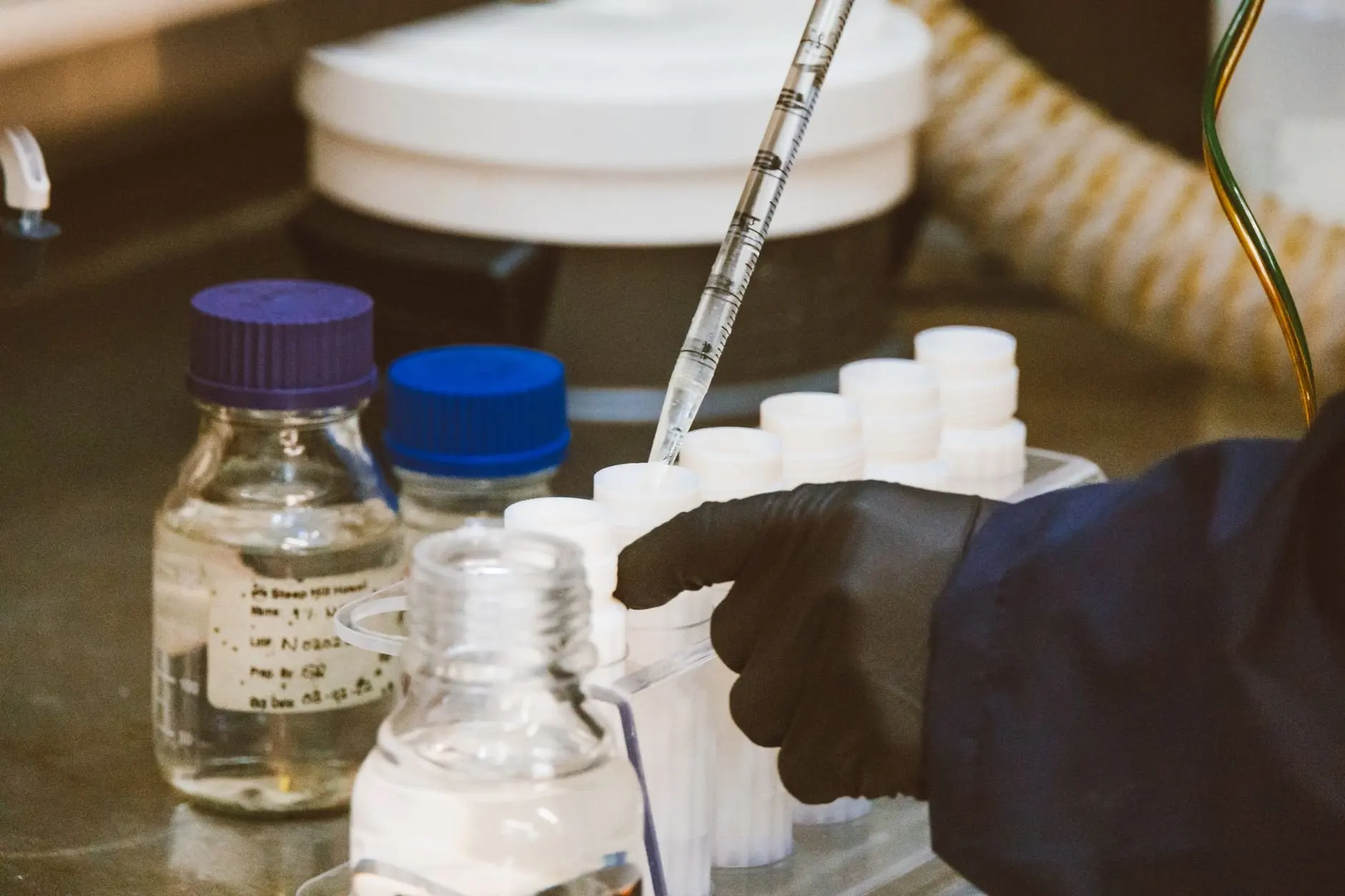
Laboratory work comes first. Both in vitro and in vivo preclinical studies must follow regulated laboratory standards known as Good Laboratory Practices. A result that comes from a lab dish or an animal study is therefore early evidence produced under rules, but it is not evidence that the drug works in patients.
An investigational new drug application is the submission a sponsor makes to the FDA to move from this laboratory stage towards testing in people. A drug described as being in human trials has reached that point. That fact says nothing yet about whether the drug is effective or will be approved, so a headline built on it deserves caution.

Phases of human testing
Human testing runs in three phases, and the size, length and attrition grow clearer when set side by side.
- Phase 1. It involves 20 to 100 study participants and lasts several months. About 70% of drugs move on.
- Phase 2. It involves up to several hundred people, who must have the disease or condition, and lasts from a few months to two years. About 30% of drugs move on.
- Phase 3. A Phase 3 clinical trial involves 300 to 3000 volunteers and can last up to four years. About 25% to 30% of drugs reach this last phase of clinical research.

The numbers support a clear judgement. A Phase 3 result carries far more weight than a Phase 1 or Phase 2 result, because it comes from the largest group over the longest period. Early-phase results suit a cautious reading such as “promising so far”.
How many trials are needed
Counting trials is a weaker test than it sounds. According to Pharmaceutical Executive’s report, the FDA announced in February 2026 that one adequate and well-controlled clinical trial will generally be sufficient for approvals, backed by confirmatory evidence. The same report says reviewers are expected to concentrate on trial quality. That covers the magnitude of the effect, the control arms, the endpoints, statistical power, blinding and missing data.
A news story that says “only one trial” therefore tells a reader little by itself. The better question is how well that trial was designed and what evidence confirmed it.
The new drug application and FDA review
What the application contains
When trials are complete, the sponsor files a new drug application. The application contains clinical results, labeling information, safety information, drug abuse potential, patient information and directions for use. That is why an approval is more than a verdict. It rests on a large package of documents.
Drugs@FDA is the public database where a reader can look up an approved drug and open its approval documents, including the labeling. It is the quickest way to compare a news summary with what the agency published.
Review time and priority review
Once the review team confirms the application is complete, the FDA takes the next 6 to 10 months to make a decision. A priority review designation means the agency has a goal of deciding on an application within six months. These are goals for the review clock, not guarantees, and they exclude the years of development that come before filing.
Priority review is one designation among several faster routes. A separate guide, FDA accelerated approval explained, compares those routes with the standard baseline described here.
Advisory committee meetings
An FDA advisory committee meeting is a public session at which a panel of experts discusses a drug application. The FDA advisory committee calendar lists upcoming meetings, and transcripts let readers see what was said. A meeting is a step in the discussion and not an approval, so a headline that treats a panel discussion as a decision has run ahead of the process.
Checking an approval claim against public documents
A reader can test most approval claims by opening a few public records in sequence.
- Identify the stage. Match the claim to preclinical work, a trial phase, an application under review or a completed approval. Participant numbers help, since a Phase 1 trial has 20 to 100 participants and a Phase 3 trial 300 to 3000, according to Diabetes PAC.
- Open Drugs@FDA. Look up the product and read its approval documents and labeling. Compare them with the wording of the news item.
- Check the advisory committee record. If a panel is mentioned, find the meeting on the FDA calendar and read the transcript.
- Test the timeline. A claim that a drug went from idea to approval in months sits far outside the typical range of around 10 years from formulating to approval.
- Weigh the early evidence. Results that appear before peer review, such as preprints, are not part of an FDA review. The guide on what is a preprint medical research explains how to treat them.
An approved drug then reaches pharmacies, but the approval documents stay available. The labeling published there is the standard against which any later claim about what the drug is approved to do can be measured.
Frequently asked questions
| Question | Answer |
|---|---|
| How long does FDA approval take? | For most drugs, around 10 years pass between initial formulating and approval. The agency’s review of the filed application is a 6 to 10 month part of that span. |
| What is an investigational new drug application? | It is the filing a sponsor submits to the FDA after laboratory studies and before the drug is tested in people. |
| What does an FDA advisory committee meeting mean for a drug? | It is a public discussion of an application by a panel of experts. The discussion feeds into the review, but approval is still the FDA’s own decision. |
| Where are the documents behind an approval published? | Drugs@FDA lists approved products and their approval documents, including labeling, so it is the first place to check a summary. |