
| Where a claim comes from | What it can confirm | Planning use |
|---|---|---|
| Journal paper | Study design, participants, endpoints and reported results | Read the methods and results before accepting a headline summary. |
| Conference poster or abstract | Findings shown at a medical meeting | Look for a full paper before treating the result as settled. |
| ClinicalTrials.gov entry | Registered design and phase designation, from Early Phase 1 through Phase 4 | Compare the registered phase and plan with what the story says. |
| Trial phase label | Customary order: safety first, then efficacy, then comparison | Use the label to judge how far a treatment is from routine use. |
| FDA document | Regulatory status of a drug | Check whether a product is approved or still being studied. |
The five phase designations on ClinicalTrials.gov come from the CASRAI guide to clinical trial phases, and the customary progression from safety to efficacy to comparison is described in a review in Clinical Cancer Research.
Medical news today is easiest to judge when each story is traced back to its primary study, registry entry or regulatory document. The trial phase, study design and approval status then show how much weight a headline deserves.
This guide groups the checks by where a claim comes from, from a conference poster to an FDA decision. Readers new to the subject can begin with how to read a medical study, then follow the links below to the explainer that matches the wording of the story in front of them.
Choosing where to start
Every medical headline rests on a document: a journal paper, a registry entry, a regulatory notice or a conference abstract. The quickest way to judge a story is to identify that document and read the part that matches the claim. The choices below are grouped by the kind of wording a headline uses, because the wording usually points to the check that matters most.
When the headline quotes a statistic
- A change expressed as a percentage. A figure such as a drop in risk means little until the starting risk is known. The guide on relative risk vs absolute risk shows how to ask for both numbers.
- “Linked to” or “associated with”. These phrases describe a pattern, and a pattern is not the same as a cause. Read correlation vs causation in medical studies before sharing a story built on an association.
- “Statistically significant”. The phrase refers to a calculation, not to the size or importance of an effect. The explainer on what is a p-value in medical research covers how to read it alongside a confidence interval.
When the headline names a decision or a stage
- “Approved”. An approval is a regulatory event with a defined route. Start with how does the FDA approve a new drug, then check the special pathways covered further down this page.
- “Phase 2” or “Phase 3”. A phase label says what question a trial is asking and roughly how many people it enrolls. The phase section below sets out the typical pattern.
- “Results published”. Look for the original paper or the registry results page rather than the press summary. The registry section explains where those results live.
If a story combines several of these cues, work from the source backward. Identify the document first, then the design, then the numbers, and only then the regulatory status. That order avoids spending time on statistics from a study that turns out to be an early or preliminary report.
Where new findings first appear
New findings usually surface in one of three places: a conference presentation, a preprint or a journal article. Each deserves a different level of caution, and a news story does not always say which one it is reporting. The first task is to find out.
Conference posters and abstracts
Medical meetings are often where researchers first show results to colleagues. A poster session gives a short, visual summary with a chart or two, which makes it easy for a reporter to pick up and hard for a reader to verify. When a story cites a meeting, search for the full paper by the same authors. If none exists yet, treat the result as an early report and look for the same trial in a registry to see what was originally planned.

Preprints and peer-reviewed papers
A preprint is a manuscript shared publicly before a journal has reviewed it. A reader who sees a dramatic claim based on one should read what is a preprint medical research and wait for the reviewed version before changing any health decision. Journal publication adds a layer of outside scrutiny, but it does not guarantee that a conclusion is right. The explainer on what is peer review in medical journals covers both what the process checks and what it leaves unchecked.
Published papers also carry a citation that readers can use to confirm the record. The review by the authors writing in Clinical Cancer Research, for example, appears as volume 21, issue 20, dated 15 October 2015, and a reader can look it up from that reference. A story that cannot point to anything equally specific is a weaker starting point than one that can.
Once a finding has a journal home, the next question is how far it sits from patients. Laboratory results and early human studies sit at very different distances, and the next section separates them.
Laboratory and early-stage stories
Stories about cells, tissue samples or animal experiments describe work done before a treatment reaches people. They can be real advances, but they say little about whether a treatment will help a patient. The review in Clinical Cancer Research names the lack of predictability of preclinical data for clinical results, and of Phase II data for Phase III results, as a major challenge in drug development.
That finding is useful as a reading rule. A reader can match the strength of their reaction to that distance. Interest is reasonable at any stage, while a change in personal health decisions is better reserved for results that have been tested in people and then compared against other treatments.
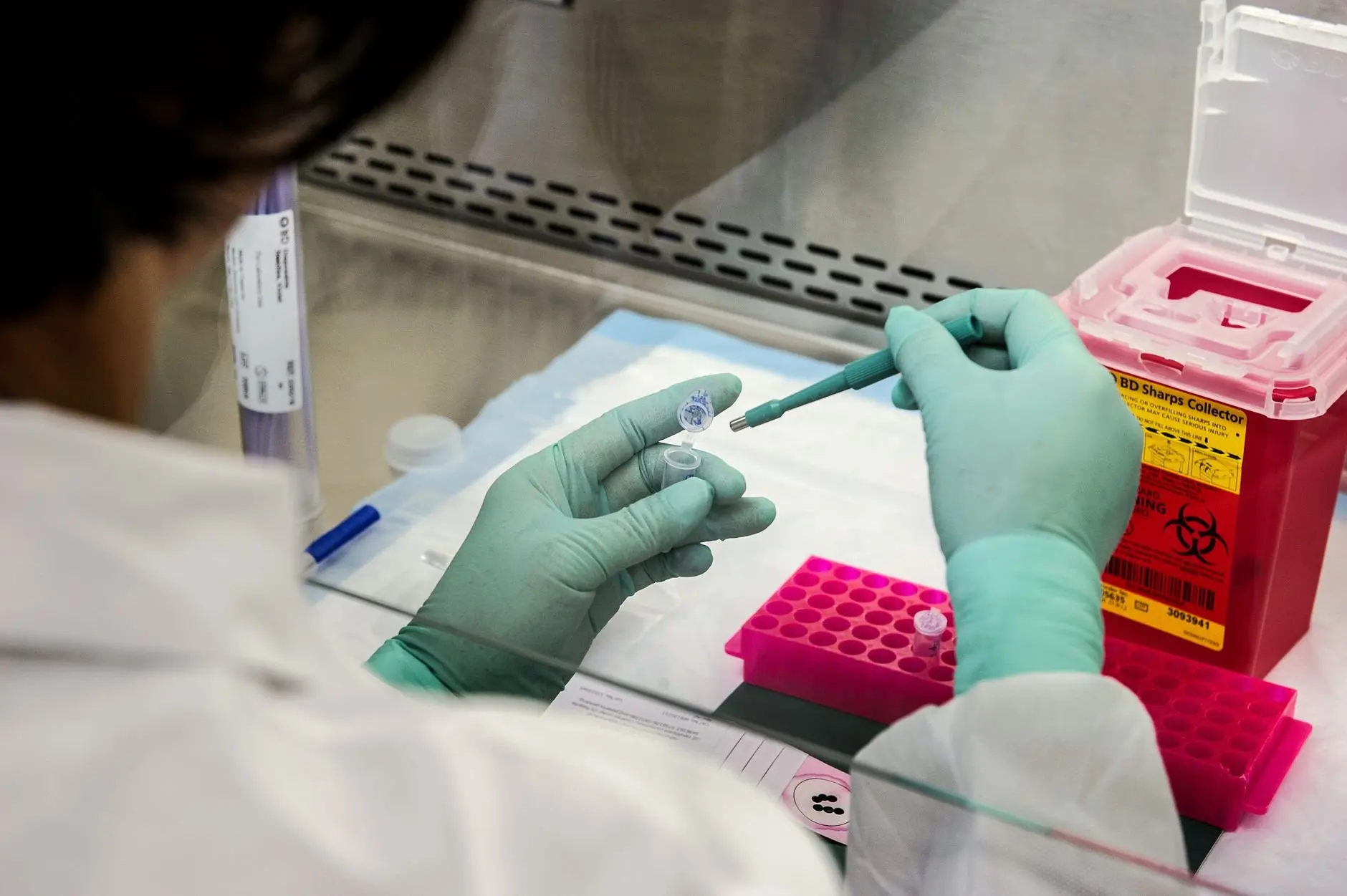
Three questions help when reading a bench-science story. Ask what was actually tested, whether the study involved people at all, and what the researchers themselves say comes next. A responsible report names the next step, such as a first safety study in volunteers, and a headline that skips it is promising more than the research supports.
Clinical trial phases
Phase labels appear in a large share of medical news because they compress a lot of information into one word. Understanding them lets a reader place any trial story on a map from first-in-human safety checks to testing in large groups.
How do clinical trial phases work?
Trials customarily progress from safety in Phase I to efficacy in Phase II and then to comparison in Phase III, according to the Clinical Cancer Research review. Phase 1 trials typically enroll 20 to 80 participants, and those participants are often healthy volunteers, though oncology and some other Phase 1 trials enroll patients, as the CASRAI guide explains. Phase 2 enrolls a few hundred participants who have the condition the drug is intended to treat. Phase 3 enrollment runs from several hundred to several thousand participants.
ClinicalTrials.gov uses five phase designations, from Early Phase 1 (formerly labeled Phase 0) through Phase 4. The legal basis for the phase system is 21 CFR 312.21, and FDA created an exploratory IND category in 2006. A reader who wants the full walk-through can use clinical trial phases explained.

Phase comparison at a glance
| Phase | Enrollment and setting | Customary question | Planning use |
|---|---|---|---|
| Phase 1 | Typically 20 to 80 participants, often healthy volunteers; patients in oncology and some other trials | Safety | Read a Phase 1 result as an early safety signal, not evidence of benefit. |
| Phase 2 | A few hundred participants who have the target condition | Efficacy | Treat a positive result as encouraging but still preliminary. |
| Phase 3 | Several hundred to several thousand participants; design and statistical plan pre-specified before enrollment | Comparison | Give this stage the most weight, then check the registered plan against the report. |
| Phase 4 | Postmarketing, outside 21 CFR 312.21 | Follow-up after marketing | Use these studies to see how a marketed product performs afterward. |
The enrollment ranges and the Phase 4 status come from the CASRAI guide to clinical trial phases, and the customary question at each stage follows the Clinical Cancer Research review.
What a phase label does not tell you
A phase label describes the stage of a study, not the quality of its result. Two Phase 2 trials can differ greatly in design, and a Phase 3 trial can still miss its goal. The label also says nothing about the measure a trial used to define success. The guide to primary endpoint vs secondary endpoint explains why a story that highlights a secondary result may be telling readers about something the trial was not mainly built to answer.
Because the Phase 3 design and statistical plan are pre-specified before enrollment begins, they offer a fixed reference point. If a news story emphasizes an outcome that does not match the pre-specified main goal, that mismatch is worth noting. The registry entry is where a reader can usually check what the plan was.
Reading the study itself
After the source and stage are identified, the study design determines how much a result can show. This is the part of a news story most often compressed or left out, and the checks here are the ones that change a reader’s conclusion most often.
Choosing the right design for the claim
A randomized controlled trial is a design in which participants are randomly allocated to the groups being compared. An observational study watches what happens to people without assigning them to a treatment. The two answer different questions, and a story about a cause should be backed by a design capable of supporting it. The comparison page on randomized controlled trial vs observational study sets out when each design is the better fit and what each can and cannot support.

When one study is not enough
Single studies can disagree, and a story built on one result may be overtaken by the next. Reviews that pool the evidence are often the better anchor for a health decision. The guide to systematic review vs meta-analysis explains how the two approaches differ and why a pooled estimate is only as good as the studies and search behind it.
A useful habit is to annotate the paper, not the news story. Mark the population studied, the comparison group, the main outcome and the headline number. Then read the news report and note which of those four details it kept and which it dropped. A story that drops the comparison group or the population has usually changed the meaning of the finding.
Registry entries and trial results
A registry entry is the public record of what a trial set out to do. For trials in scope, registration on ClinicalTrials.gov and results reporting obligations fall under FDAAA 801, as the CASRAI guide notes. That gives readers a second document to compare against a news story, one that is separate from the press release and from the journal paper.
Using a registry to check a story
Start by searching for the drug, the condition or the sponsor named in the story. Compare the phase designation in the entry with the phase in the report. Then check the stated main goal and the planned enrollment against what the story describes. A mismatch does not prove an error, since entries are updated, but it tells the reader which question to put to the original paper.
The ABC News report on the FDA’s plan to pilot real-time clinical trial tracking, which was announced on April 28, 2026, shows how a trial can appear in a news item. The story mentions AstraZeneca conducting a Phase 2 trial in patients with mantle cell lymphoma. A reader tracing that detail would look for the matching registry entry, confirm the phase and read the stated goal, rather than relying on the one-line description in the article.

Finding results once a trial finishes
Results pages are where a registry entry becomes most useful, because they give the outcome data in a structured form. The walk-through on how to find clinical trial results explains where to look and what to do when an entry shows no results yet. A missing results section is a reason to look for the paper or the sponsor’s report, not a reason to assume a trial failed.
Regulatory news and the approval pathway
Regulatory stories carry the most consequence for readers, since they concern whether a product can be prescribed or sold. They also carry the most shorthand. “Approved”, “cleared” and “authorized” are not interchangeable, and the exact status is usually stated in an agency document rather than the headline.
The steps from trial to decision
The Clinical Cancer Research review notes that the FDA is involved in the drug approval process from points early in development. The typical pathway looks like this:
- Early development. The sponsor works with FDA while a drug is still being studied.
- Trial phases. The drug moves through the customary progression from safety to efficacy to comparison.
- Application. After Phase 3, the sponsor must submit a New Drug Application or a Biologics License Application, according to the CASRAI guide.
- Regulatory decision. Completing Phase 3 does not itself change a drug’s regulatory status, so the status changes only through that application and the FDA’s decision on it.
The ABC News coverage notes that it can take 10 to 12 years for promising drugs to reach the market. That is a general span reported in the story, not a promise for any one drug, and the pilot it describes is aimed at changing how trials are tracked.

Faster routes and what they rest on
Some drugs reach patients through routes designed to move faster. The guide to FDA accelerated approval explained sets out how accelerated approval, breakthrough and fast track differ. The size of the evidence behind a decision is worth checking in each case. The review in Clinical Cancer Research records that Gleevec first achieved FDA accelerated approval in 2001 for chronic myelogenous leukemia. It also notes that an approval for pembrolizumab in advanced melanoma was based on results in a subset of 173 patients. The FDA’s nivolumab decision, by contrast, was based on a subset of 120 patients enrolled in a randomized Phase III trial.
These examples show why a reader should look past the word “approved” to the evidence behind it. A decision resting on a subset of a trial is not the same as one resting on a complete, large comparison, and the regulatory documents describe which one applies.
Emergency authorization and product types
Authorization during an emergency is a different category from full approval, and the two should not be used as synonyms in a news story. The comparison of FDA approval vs emergency use authorization explains the difference in standard and in what a product can be used for. Another common source of confusion is the difference between copies of a drug. The guide to biosimilar vs generic drugs explains how each type of product is approved and why the names are not interchangeable.
A practical checklist for any health story
The checks above can be combined into a short routine that works for most stories. It takes the reader from the claim to the original document and back, with each step designed to catch a different kind of error.
- Name the document. Decide whether the story rests on a poster, a preprint, a journal paper, a registry entry or an agency notice.
- Find the original. Search for the paper, the registry record or the agency page, not another news summary of it.
- Place it on the phase map. Note whether the work is laboratory research or a Phase 1, 2, 3 or 4 study, and set expectations to match.
- Check the design. Ask whether the study could support the type of claim the headline makes.
- Compare the plan and the report. Match the registered main goal with the outcome that the story highlights.
- Confirm the status. For a drug or device story, read the regulatory document for the exact status.
Not every story needs every step. A report on a laboratory discovery needs the first three, while a report on a newly approved drug needs the last two more than the rest. The routine is meant to be applied in proportion to the stakes of the decision a reader is about to make.
Frequently asked questions
How long does it take for a promising drug to reach the market?
An ABC News report on the FDA’s real-time trial pilot says it can take 10 to 12 years for promising drugs to reach the market. The span is a general figure from that report, not a prediction for any single product.
Do trial phases always run one after another?
No. The CASRAI guide notes that the phases are not necessarily conducted in strict sequence. The customary order of safety, efficacy and comparison is a pattern, so a story’s phase label should be checked against the registry entry.
How quickly must sponsors report serious reactions during a trial?
Sponsors must report any unexpected fatal or life-threatening suspected adverse reaction to FDA within 7 calendar days. Other serious, unexpected suspected adverse reactions must be reported within 15 calendar days, according to the CASRAI guide.
What is 21 CFR 312.21?
It is the legal basis for the phase system in the United States, according to the CASRAI guide. Phase 4 postmarketing studies sit outside it, which is one reason Phase 4 is treated differently from the earlier phases.